

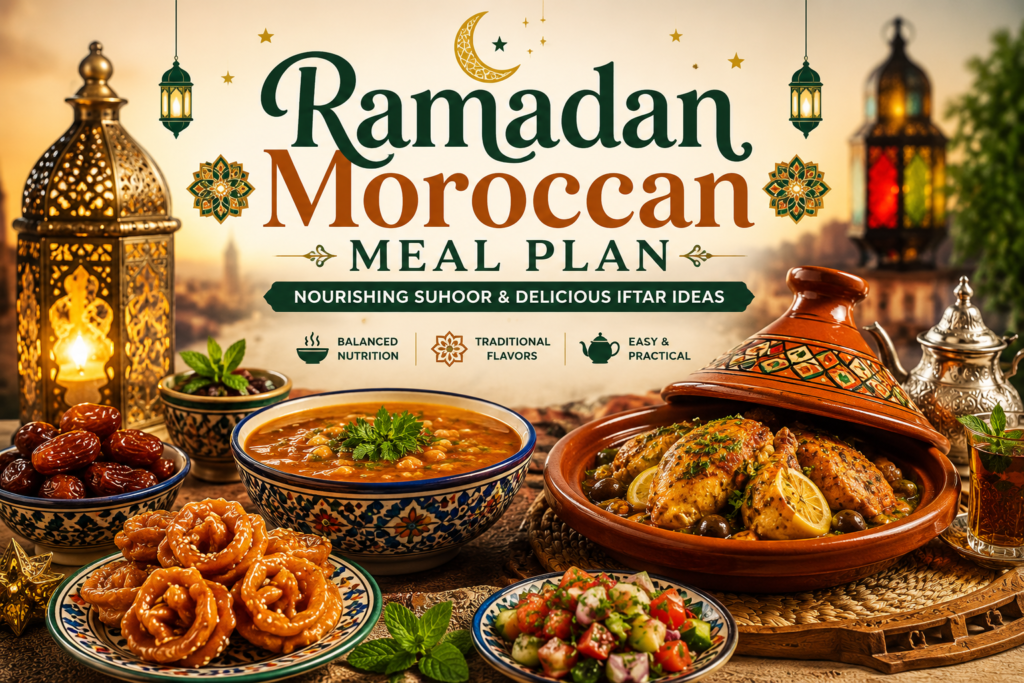
Ramadan is a special time for family gatherings, spiritual reflection, and sharing delicious meals. Planning your weekly menu in advance can make fasting easier while ensuring balanced nutrition throughout the holy month. This Ramadan Moroccan meal plan includes traditional favorites, healthy ingredients, and simple dishes that help keep energy levels steady from Suhoor to Iftar.
Whether you’re preparing meals for a family or planning for yourself, this weekly Ramadan meal plan combines authentic Moroccan flavors with practical meal preparation ideas.
Why Meal Planning During Ramadan Matters
A well-planned Ramadan menu can:
- Reduce daily cooking stress
- Help maintain balanced nutrition
- Prevent food waste
- Simplify grocery shopping
- Save time during busy evenings
Traditional Moroccan cuisine offers many nourishing dishes that are ideal for fasting days, especially when meals are balanced between protein, vegetables, healthy fats, and whole grains.
Ramadan Weekly Meal Plan
| Day | Suhoor | Iftar |
|---|---|---|
| Monday | Whole wheat bread, cheese, olives, milk | Harira, dates, chicken tagine with olives |
| Tuesday | Oatmeal with almonds and honey | Lentil soup, grilled fish, Moroccan salad |
| Wednesday | Eggs, bread, yogurt | Harira, kefta tagine, seasonal fruit |
| Thursday | Cheese sandwich and banana | Vegetable couscous and mint tea |
| Friday | Oats, dates and milk | Chicken rfissa and fresh salad |
| Saturday | Yogurt, nuts and whole grain bread | Seafood tagine and roasted vegetables |
| Sunday | Omelet, olives and fruit | Harira, couscous with vegetables and chickpeas |
Weekly Shopping List

Proteins
- Chicken
- Fish
- Eggs
- Lentils
- Chickpeas
Vegetables
- Tomatoes
- Onions
- Carrots
- Zucchini
- Bell peppers
Pantry Essentials
- Olive oil
- Flour
- Oats
- Dates
- Honey
Moroccan Staples
Ramadan Meal Preparation Tips
Prepare Harira in Advance
Harira freezes well and can be prepared in larger batches for several days.
Stock Up on Dates
Dates provide quick energy and are traditionally used to break the fast.
Include Protein at Suhoor
Eggs, yogurt, cheese, and nuts help maintain fullness throughout the day.
Stay Hydrated
Drink plenty of water between Iftar and Suhoor to support hydration during fasting hours.
Keep Meals Balanced
Avoid overly heavy meals every evening and include vegetables whenever possible.
Final Thoughts
This Ramadan Moroccan meal plan helps simplify meal preparation while preserving the authentic flavors of Moroccan cuisine. With a little planning, families can enjoy nutritious Suhoor and Iftar meals throughout the week while spending more time focusing on the spiritual and social aspects of Ramadan.